WHO ARE THE 25?
The content below explains how the authors separated the 40-year history of the Đổi Mới reform era into five separate time segments. These five eras are meant to differentiate how the social and economic environment of Vietnam has changed over the past 40 years. Each of these eras has a beginning and an end though there is also a lot of over-lapping of eras.
The individuals profiled were also segmented into five specific groups. Each of the 25 individuals below are part of one of these groups, which are:
Group One – Vietnamese who studied and worked in Eastern Europe in the 1970s and 1980s and then returned to Vietnam to build their careers.
Group Two – Vietnamese who studied in Western Europe, North America, East Asia, and Australia / New Zealand in the 1990s and 2000s and then returned to Vietnam to build their careers.
Group Three – Vietnamese who never studied abroad, but chose to educate themselves within Vietnam and launched their ideas as startups mostly on their own.
Group Four – Overseas Vietnamese who left Vietnam in the past and then returned to Vietnam to build and/or re-build their lives in Vietnam.
Group Five – Foreigners (non-Vietnamese) who have chosen Vietnam as their new home to build careers, launch companies, and develop their innovative ideas with Vietnam as the home base.
As the authors of this book, our challenge was to identify 25 “make a difference” people from one of these five groups and match them with one of the five specific eras over the 40-year history of Đổi Mới. These individuals may not fit exactly into one or more of these eras, but they did begin to make a difference or had an impact during one of these times frames.
Early Đổi Mới
Approximate Time Frame: This era began in the late 1980s and extended into the early and mid-1990s.
Though Đổi Mới was introduced in 1986, there was not a lot of activity in the first few years. There were a few milestones such as the land law, freeing up of the agricultural sector, and some decentralization of decision making to the provinces, but the country’s command economy structure was still mostly in place. State-owned enterprises (SOEs) still ran the show in terms of business.
In terms of foreign investment, the first companies in were from Taiwan and South Korea. Many of them were labor intensive industries (e.g., shoes, garments, furniture-making, etc…) whose owners were attracted to the relatively cheap land and labor available in Vietnam. They brought in capital, machinery, and perhaps most importantly foreign customers (purchase orders) for Made-In-Vietnam products. While there were opportunities in the early years of Đổi Mới, there was nothing easy about doing business during this era.
The individuals who made a difference during this era were true trailblazers.
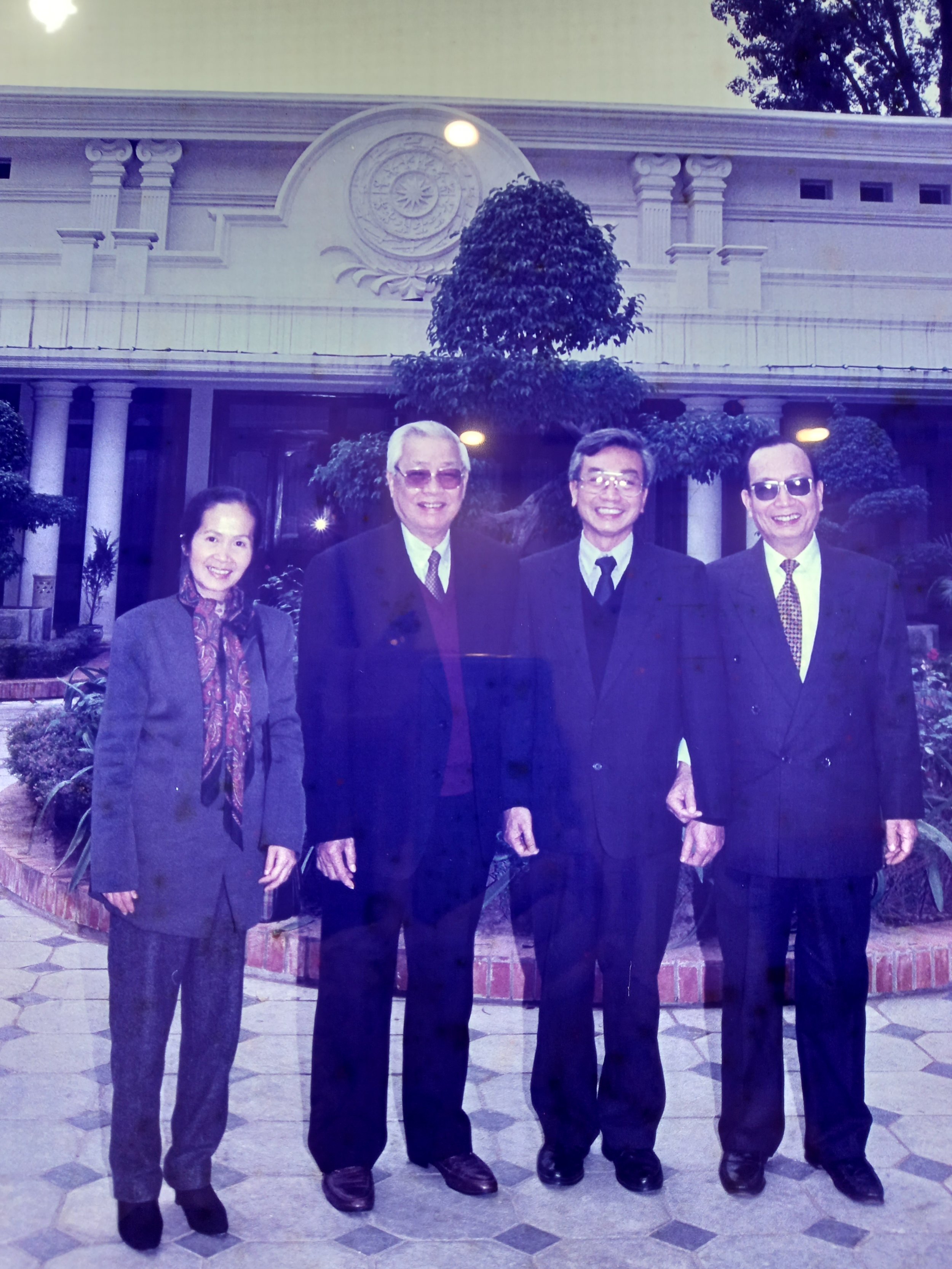
-
![Four adults, two men and two women, wearing business attire, standing outdoors in front of a building with columns and decorative carvings, posing for a photo.]()
Phạm Chi Lan
“If you have to ask for permission first, that is not a private sector”
-
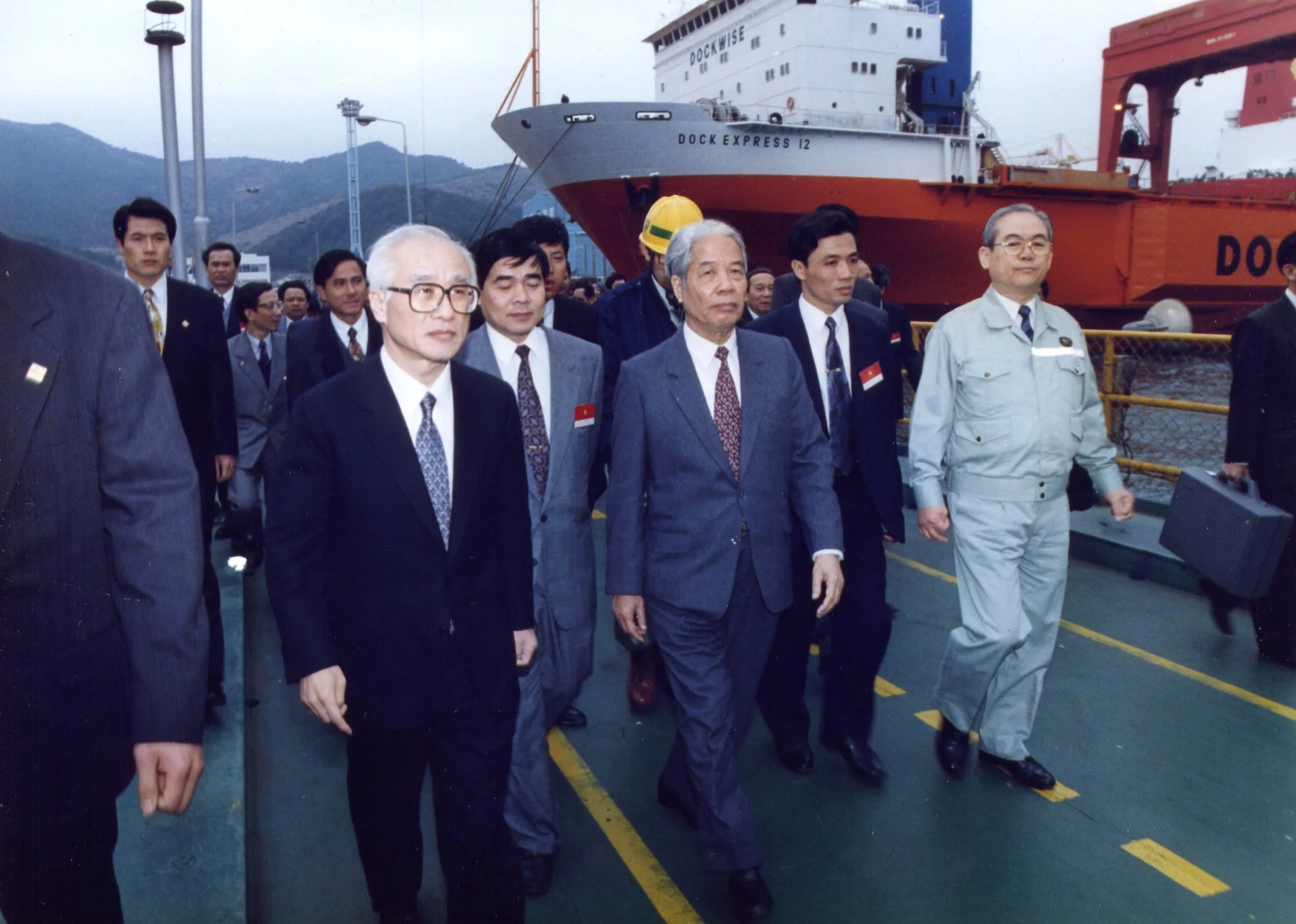
![Kim Woo Chong]()
Kim Woo Chong (1936 - 2019)
“His gift represented the Daewoo spirit that he had created” - Kim Son Yung, son of Kim Woo Chong
-
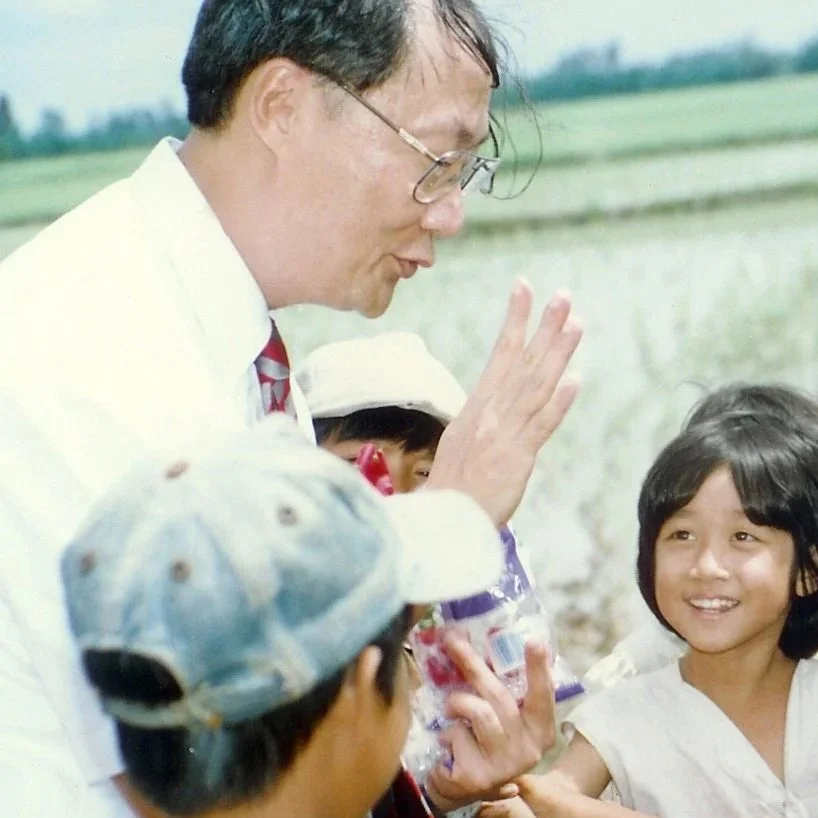
![A man wearing glasses and a white shirt with a red tie in a rice field, raising his hand for a high five with children around him.]()
Laurence Ting (1939 - 2004)
“He just wanted to help. That’s it.” - Albert Ting, son of Laurence Ting
-
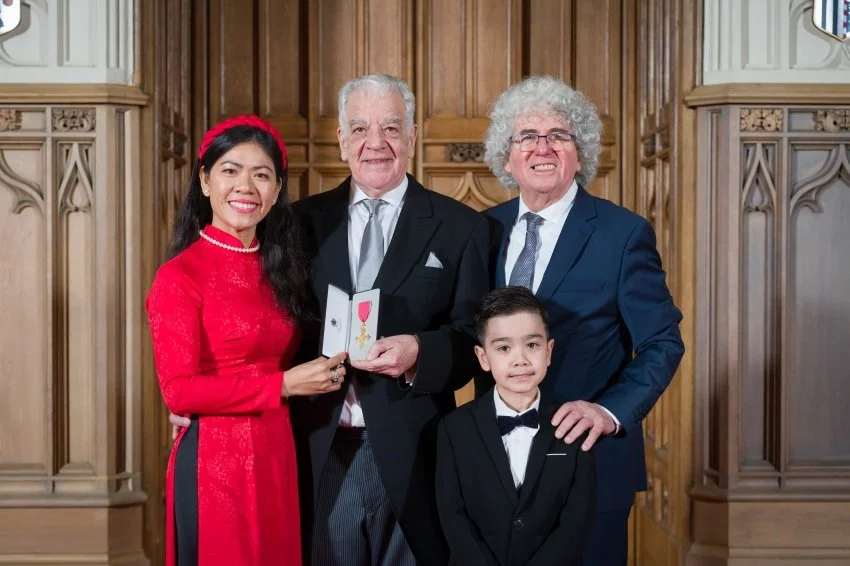
![Ken Atkinson]()
Kenneth Atkinson, OBE
“Vietnam was a breath of fresh air in more ways than I could have ever imagined.”
-
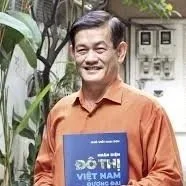
![Ngo Viet Nam Son]()
Dr. Ngo Viet Nam Son
“If a high income from real estate projects had been my goal, I wouldn’t have needed to study abroad.”
The American Embargo Era
Approximate Time Frame: Technically, this era started immediately after the end of the American War on April 30, 1975 when the USA government imposed an embargo on all of Vietnam. Prior to Liberation, the Americans had an embargo on the government of North Vietnam which was extended to the entire country after the war was over and unification took place. This embargo was lifted in February 1994. This led to USA – Vietnam Normalization of diplomatic relations in 1995 and eventually the USA-Vietnam Bilateral Trade Agreement in 2001.
One of the biggest obstacles for the Vietnamese economy in the early years of Đổi Mới was the US Embargo. It severely hampered Vietnam’s attempts to grow its economy and join the international market place. Beginning in 1989 and due to the political upheaval in Eastern Europe, most of Vietnam’s established business and trading relationships were in flux. The Soviet Union, for example, was dissolving and could barely feed itself much less support an old socialist ally.
In addition, the US Embargo was not just an American issue. Multilateral institutions like the International Monetary Fund or the World Bank were restricted in what they could do in and for Vietnam. It also applied to private business. For example, important private companies like Airbus could not sell airplanes to Vietnam Airlines because the planes had American-made parts. Obviously, the American company Boeing had no opportunity to sell anything in Vietnam. The lifting of the embargo and the eventual normalization of diplomatic and trade relations between the United States and Vietnam changed nearly everything. There was suddenly a ‘Green Light’ for American companies and numerous other companies and institutions with American ties to do business in Vietnam.
The individuals profiled during this era knew these issues extremely well and worked hard to move forward despite the obstacles.
-
![Nguyen Dinh Luong]()
Nguyễn Đinh Lương
“The biggest obstacle was the hatred. It was too deep and the war was too long and too fierce.”
-
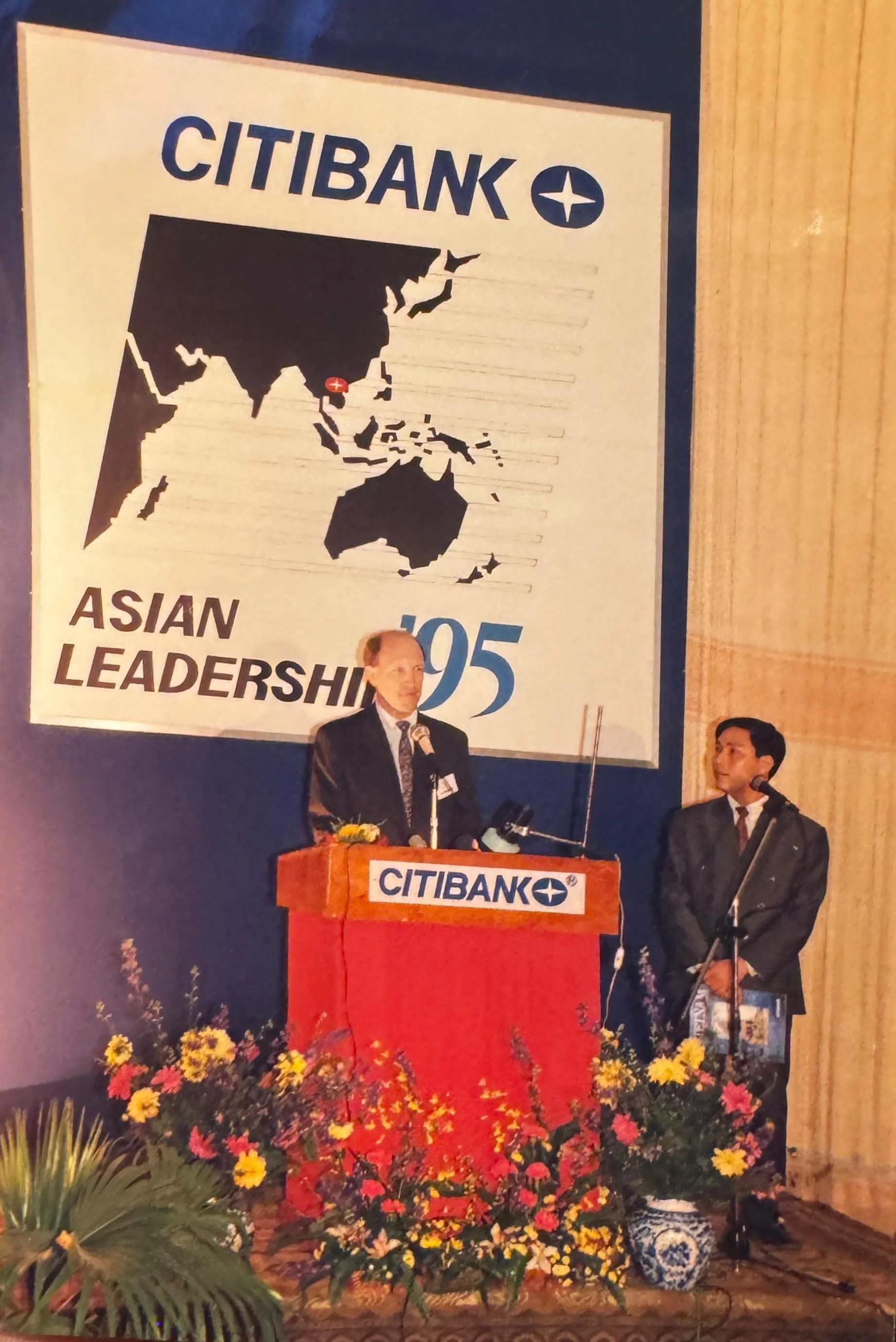
![Brad Lalonde]()
Bradley Lalonde
“One of my roles in Citibank was to basically create a platform for the future that included developing the private secto, private banks, and wealthy individuals.”
-
![Joe Massey and Truong Gia Binh]()
Dr. Joe Massey
“The whole purpose was to help them create new business entities and in so doing help Vietnam become a more prosperous and developed country.”
-
![Fred Burke]()
Fred Burke
“We told them it was our one chance to get it right for Vietnam, and it worked. Because of the work on the BTA, Vietnam was ready for the WTO.”
-
![Lina Pham]()
Lina Pham
“I realized more needed to be done since the clock is ticking. In 20 years, there may not be many veterans left on either side to personally return artifacts.”
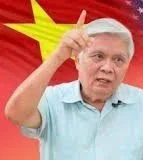
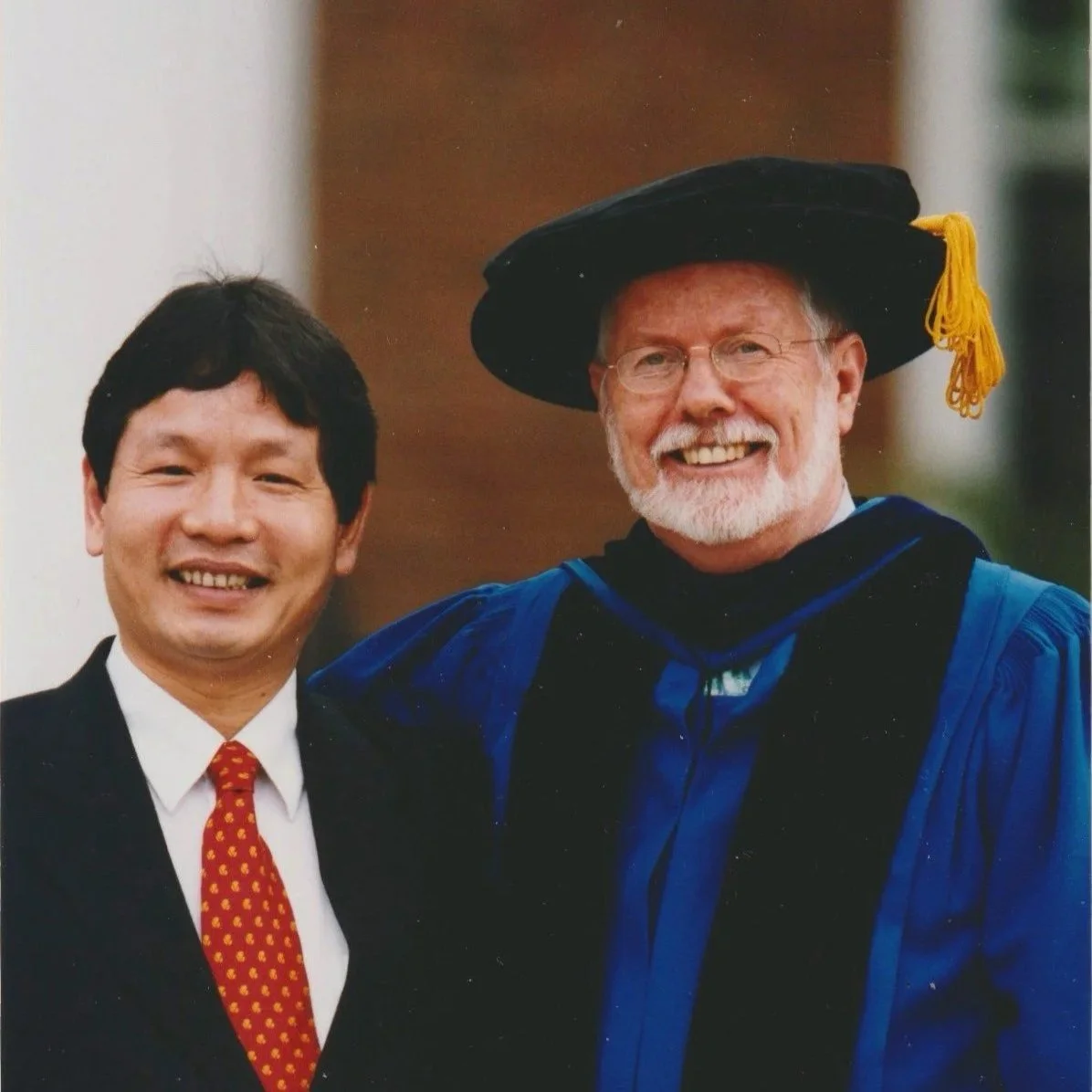
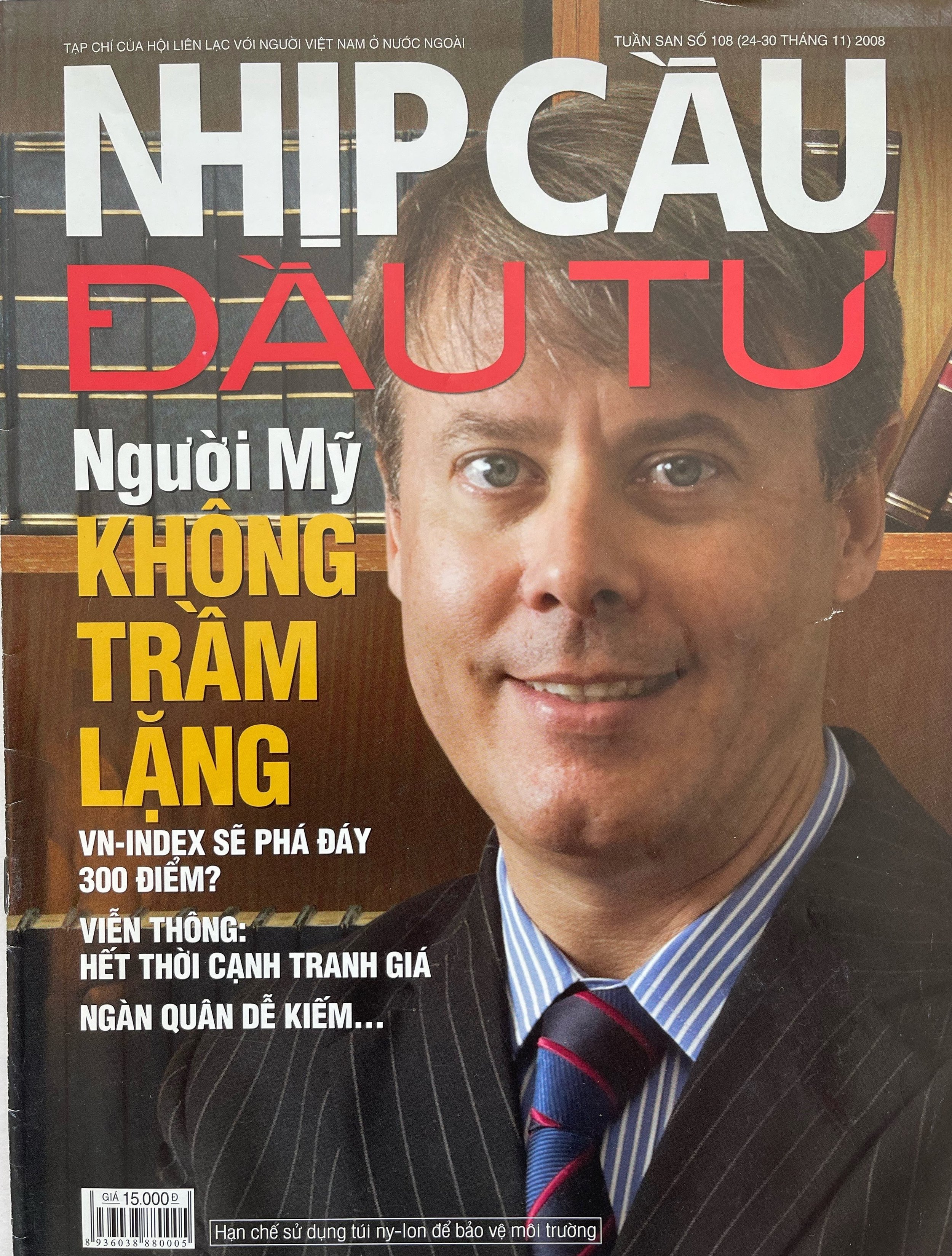

Frontier Finance
Approximate Time Frame: This era started with the first few venture capital funds in the mid- to late-1990s and continued on with the equitization of state-owned enterprises (SOEs) and the launch of the stock market in 2000 and then the development of large venture capital funds up through the 2010s.
In the mid-to-late 1990s, there were a few foreign venture capital funds in the $25 to $125 million range that began to look for investment deals in Vietnam. Most had a difficult time finding viable deals. The available opportunities were generally foreign invested joint venture companies and some 100 percent foreign owned companies. While there were private Vietnamese companies that needed investment capital, the due diligence required by the funds’ shareholders made it difficult to move forward. It was essentially impossible to invest in SOEs.
However, in the late 1990s and early 2000s, there were at least three important trends that began to grow. First, state-owned companies were being converted to shareholding companies. This process was called equitization. The shares were sold and given to management and employees of the SOEs. Some of these shares could also be purchased by local and foreign investors. Second, there were some foreign venture capital companies who began to build large investment funds with intentions of pursuing private equity investments in Vietnamese companies. Third and most importantly, the stock market was launched in July 2000. Its first two companies were equitized SOEs. In its first full year of operation and with just a few companies, the Vietnam stock market was officially the fastest growing stock market in the world at that time.
The individuals profiled for this era were basically building Vietnam’s capital markets from scratch.
-
![Dominic Scriven]()
Donimic Scriven, OBE
“One of the exraordinary benefits of this country is the optimisim, a gung-ho attitude, and a reluctance to say no. It’s also the ability to pursue lots of strands.”
-
![Don Lam]()
Don Lam
“I want to make sure that all Vietnamese people, no matter their circumstances, have the opportunity to participate in Vietnam’s growth.”
-
![Chris Freund]()
Chris Freund
“There was one night that I thought ‘What the hell did I just do?’ But that lasted for about 10 minutes, and then I’m like, ‘Okay, what the hell.’ “
-
![Pham Minh Huong]()
Pham Minh Huong
“The wisdom of our ancestors, diligence, adaptability, and especially community spirit, has helped our people overcome many historical ups and downs.”
-
![Bang Trinh]()
Bang Trinh
“What’s happened over the past 10 years has been extraordinary. Purpose gets us going, passions keeps us inspired, and persistence carries us forward.”
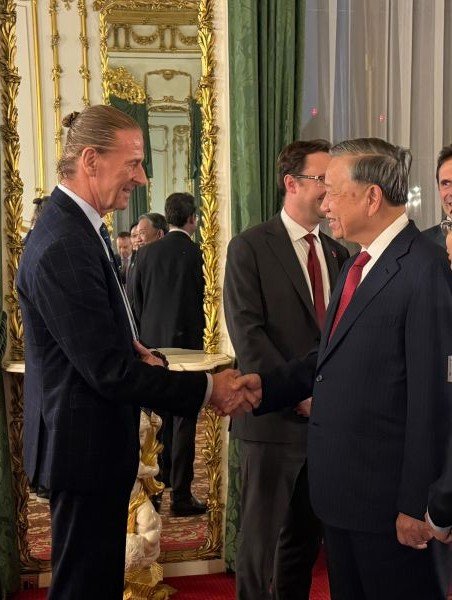
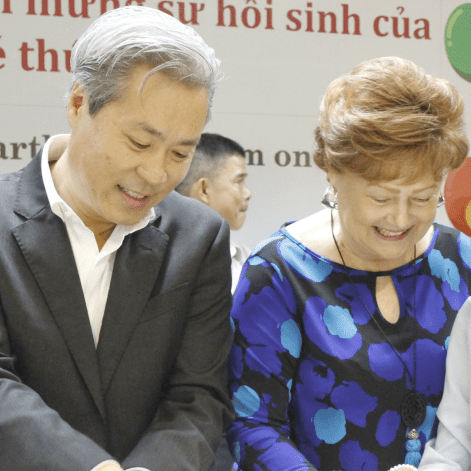
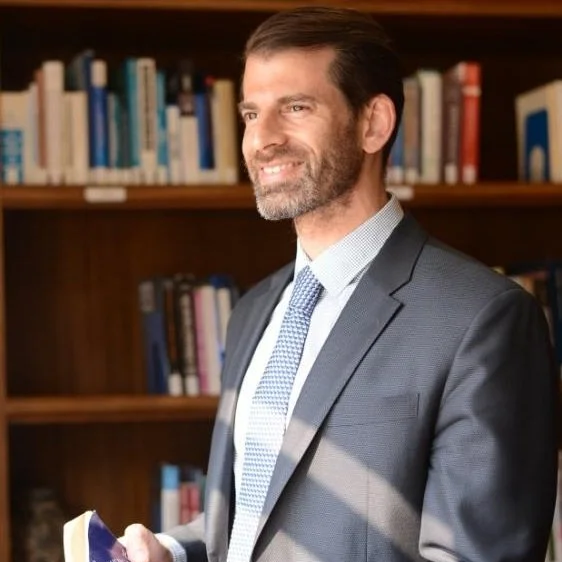
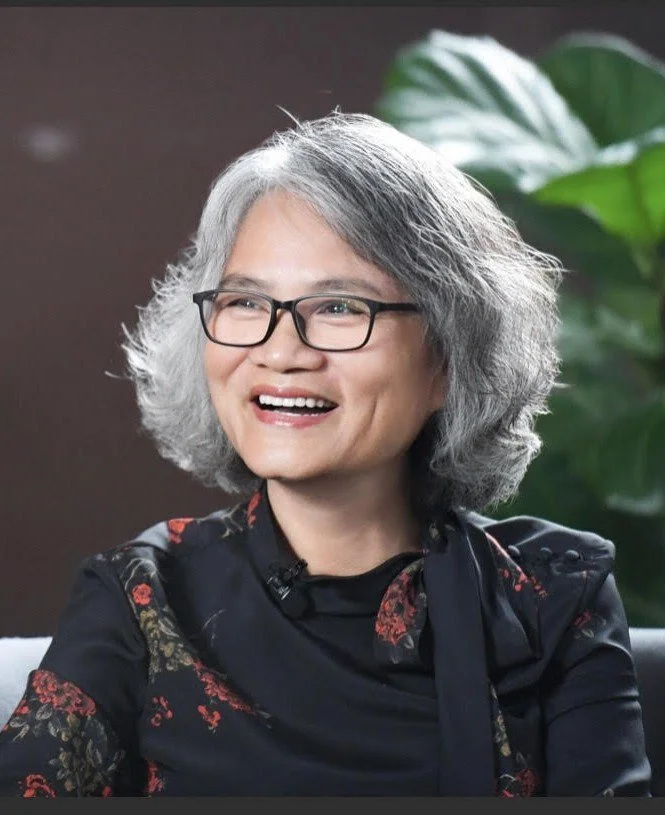
Free Trade
Approximate Time Frame: This era was kick-started by the American bilateral trade agreement (BTA) in 2000 and was firmly stamped as a durable and irreversible trend by Vietnam’s entry into the World Trade Organization (WTO) on January 1, 2007. This was followed by a series of trade agreements with countries and trade pacts around the world in the 2010s and beyond.
Vietnam’s entry into the WTO on January 1, 2007 could arguably be considered the country’s “Point of No Return” moment. This meant a point in time when a specific trend was established and it could not be easily reversed because doing so would be too disruptive. Vietnam had made the choice to not restrict imports or exports, not implement import substitution policies, and not coddle or protect large SOEs from outside competition. Instead, the message to Vietnamese business people was that the free market would decide who won and who lost.
With its entry into the WTO, this free trade path had been laid out, the rules of engagement were put into place, and essentially everyone had to play by the rules or not play at all. The result was the launch of thousands of companies who began to make products for export to overseas markets. It also meant a plethora of trade agreements with foreign countries and a huge spike in the country’s globalization rate (i.e., total trade divided by total GDP reflected as a percentage). Vietnam’s rate is around 160 percent which is one of the highest in the world among countries with a population of more than 10 million. High globalization rates are normally a feature of countries with small populations and city-states like Hong Kong and Singapore (both nations had globalization rates of 353 percent in 2023 according to the World Bank). Vietnam’s entrepreneurial manufacturers and logistic companies have begun to establish their country’s claim as the legitimate “Workshop of the World” that can deliver Made-in-Vietnam products to markets around the globe.
Perhaps the most striking feature of this era was that the ‘free trade’ trend was not just about tariffs, imports, exports, and other free trade types of issues. It was about a free trade of anything and everything, e.g., ideas, concepts, data, etc… The individuals profiled were among the leaders of this ‘point of no return’ trend.
-
![Vo Quang Hue]()
Vo Quang Hue
“I had successfully exported the BMW platform to Egypt and Mexico to build cars. I could do this because I was a German engineer. Why not do the same in Vietnam?”
-
![Tieu Yen Trinh]()
Tieu Yen Trinh
“Vietnam is at a 10-year diamond opportunity. We need to act on it now because after 10 years Vietnam will be aging.”
-
![Nguyen Thi Tra My]()
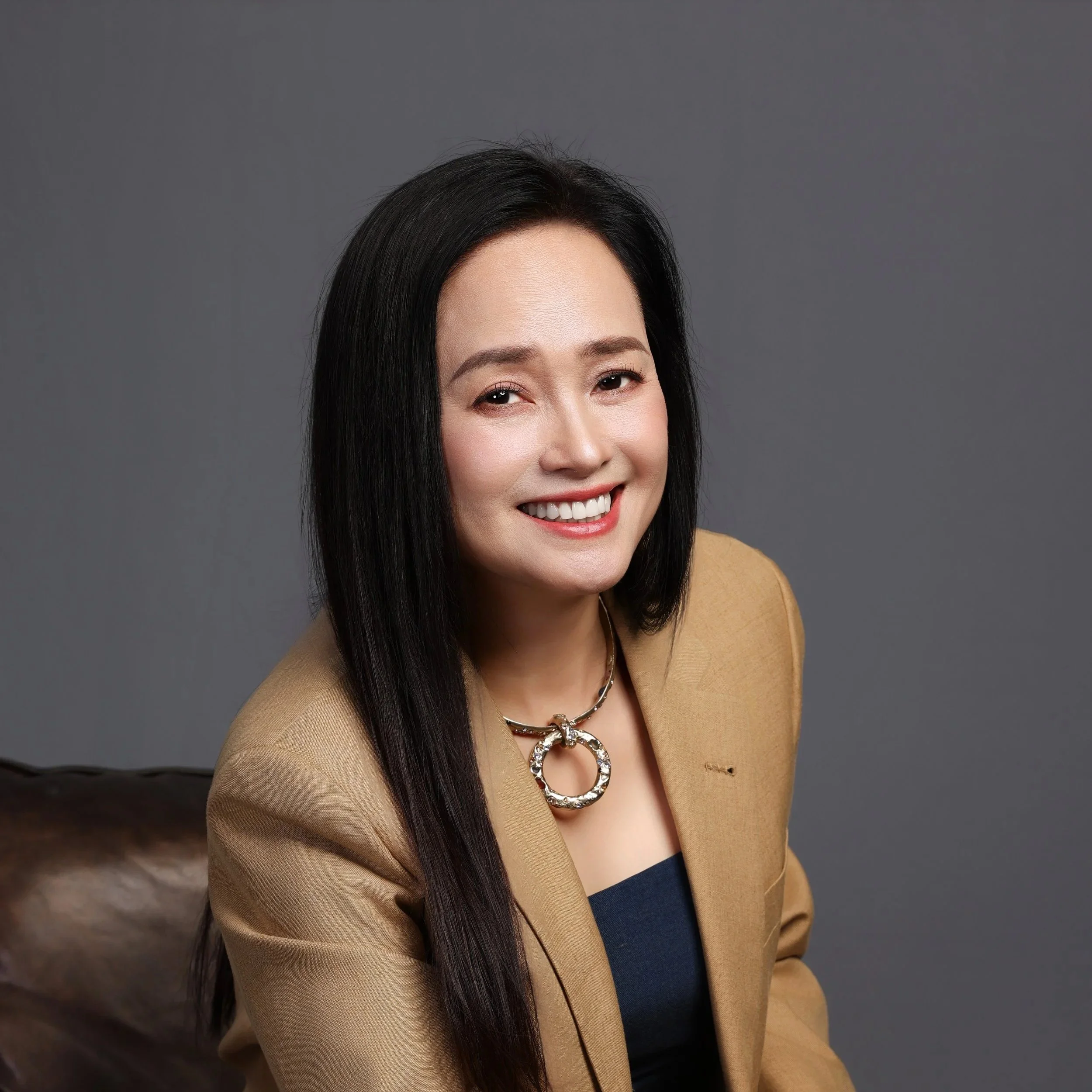
Nguyen Thi Tra My
“We are not only producing food. We are producing trust. When a mother buys our rice or shrimp or fruit, she trusts us to keep her family safe. That is the highest resposibility any company can have.”
-
![Ly Qui Trung]()
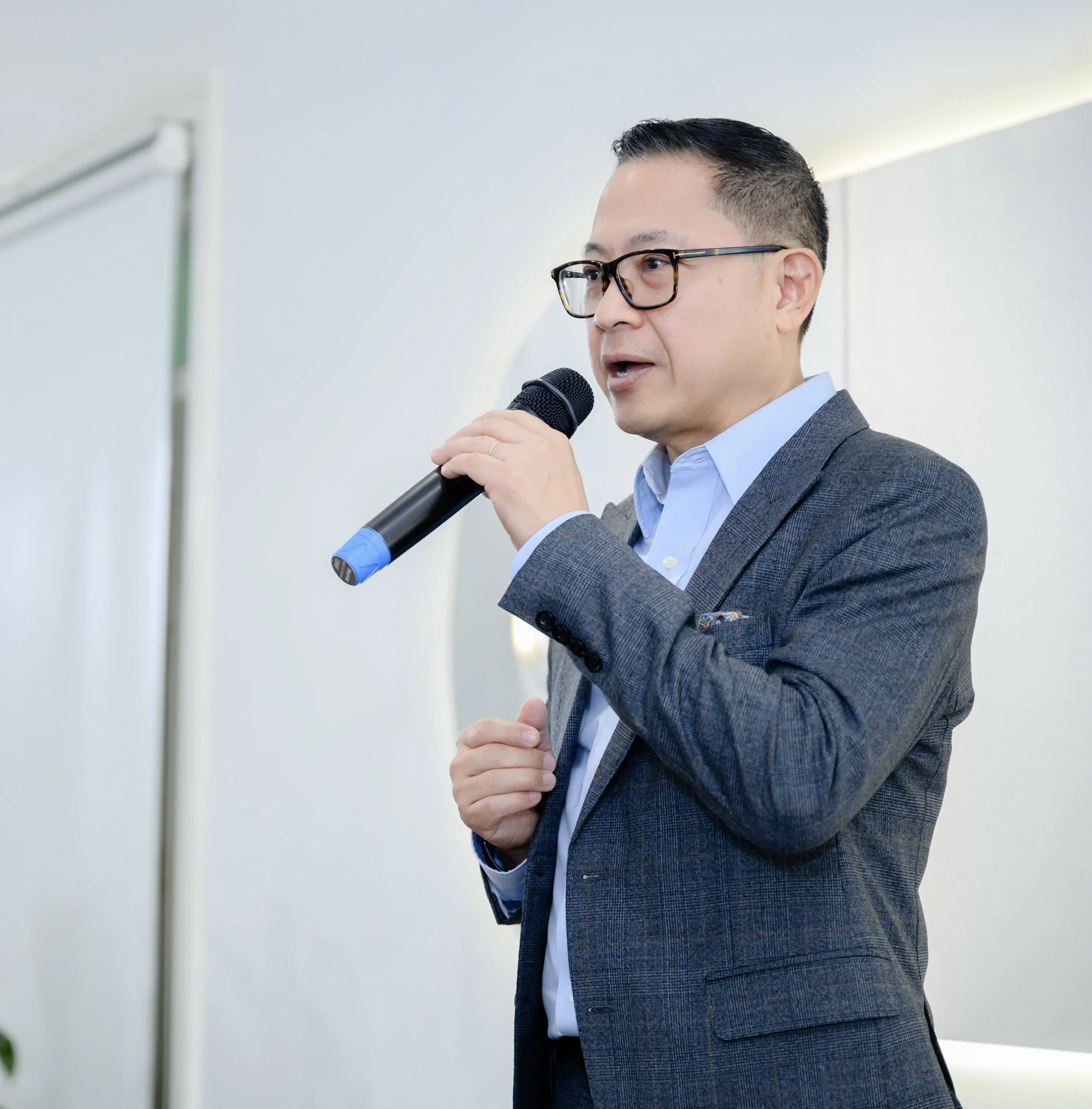
Ly Qui Trung
“Education is long term, and the money, even with a private university, should come second. The first goal is to build a prestigious university. I had that same attitude with Pho 24.”
-
![Jimmy Pham]()
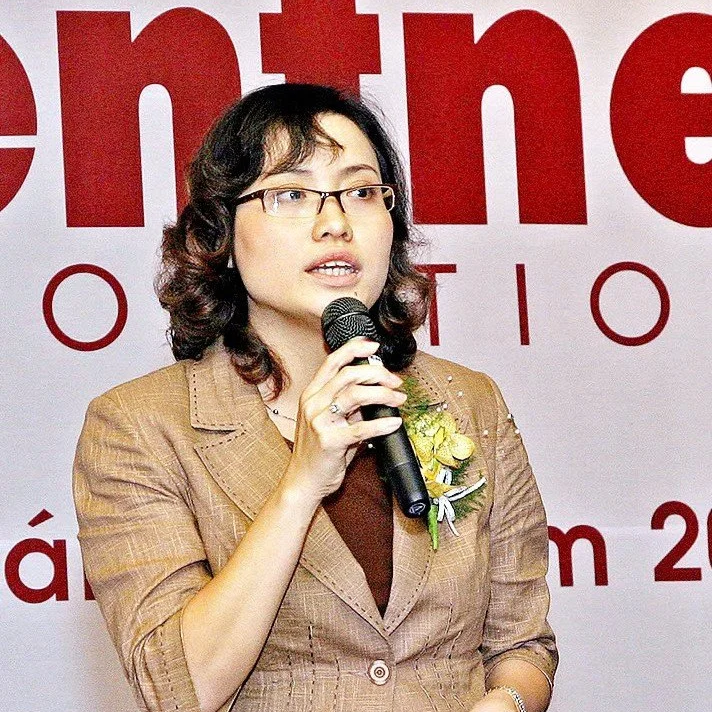
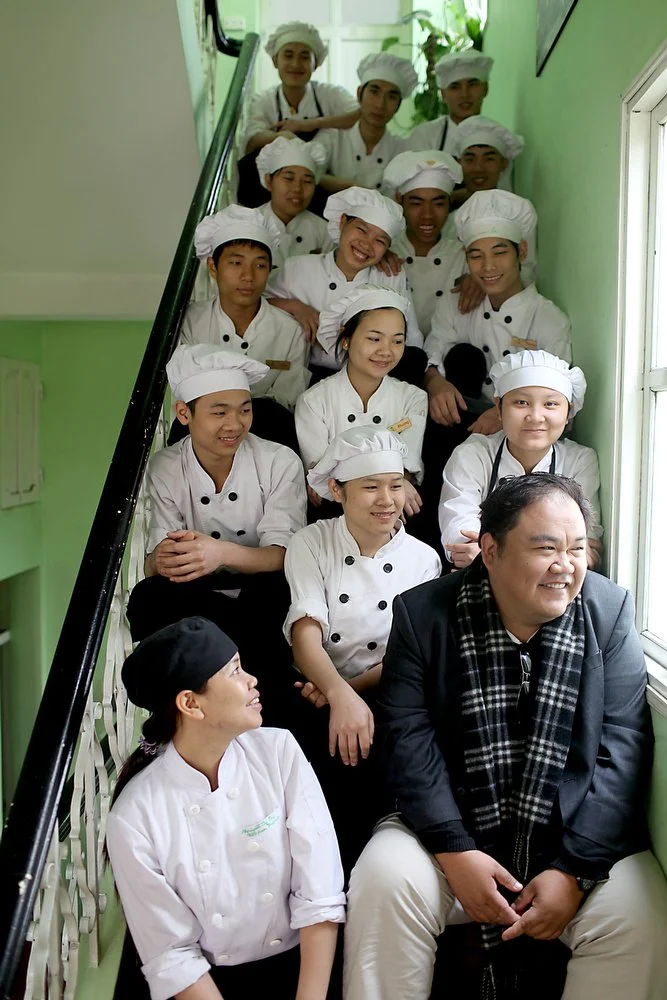
Jimmy Pham
“I knew one because I was one. I was older, fatter, and couldn’t speak Vietnamese very well, but I knew them (street kids) because they were me and I was one of them.”
COVID & VIetnam’s High Tech Future
Approximate Time Frame: This era focuses on Vietnam’s post-Covid environment and the range of leap frog technologies that have arrived to Vietnam. This includes the boom of ecommerce and e-learning to block chain developments and on up to the introduction of A.I. and Nvidia investing in two data centers in Vietnam.
There was a lot learned by Vietnamese from the Covid-19 era. One was the affirmation and growth of ecommerce and the use of ‘e-’ anything such as elearning, ebooks, epayments, ebanking, etc… Prior to Covid, these tools and platforms existed, but not a lot of Vietnamese people were using them because of a mistrust with the payment system. During the Covid-19 pandemic, cash could not be easily used so other forms of payment had to be created or used.
There are also “leap frog” technologies that allow countries and companies to skip legacy systems and adopt the most modern, newest type of technology available in the world. In most countries, this is happening, but there is also a resistance to using these technologies because of perceived job losses, technology owners still earning rents from the technology, resistance to change, etc… In Vietnam’s case, these old technologies did not exist in substantial volumes and thus the leap forward has been easier. Vietnam’s large labor force also allows for the execution of computer software coding projects and the development of block chain ventures which would be more difficult in other countries because there are not enough coders and workers. When A.I. is added on top of all this, this mix becomes quite interesting especially considering the Vietnamese government’s mostly hands-off approach to digital firewalls.
The individuals profiled here knew these leap frog issues very well and acted on them with a clear focus and a vision for the future.
-
![Bui Hoang Tung]()
Bui Hoang Tung
“Right now, everyone has a demand to use AI. Right now, everyone has something that they want to use AI for, but they don't know how. They need people to bring AI to them.”
-
![Vu Hoang Yen]()
Vu Hoang Yen
“My friends have asked, ‘You don’t want to be an entrepreneur?’ No. What’s more important is the value you can deliver. I’ve always wanted to work for the biggest. I want to stand on the shoulders of giants”
-
![Luu Loi]()
Luu Loi
“It’s all about finding a real problem that needs a solution. It’s the vision and conviction part that is important. It doesn’t matter if a person is right or wrong. Your vision can be wrong, but it’s important to at least have one.”
-
![Nguyen Minh Hoang]()
Nguyen Minh Hoang
“The pharmaceutical insiders don’t want to change. The outsiders think the industry is too regulated and complex. Me? I’m stupid enough to not care about such things. It just try to solve problems.”
-
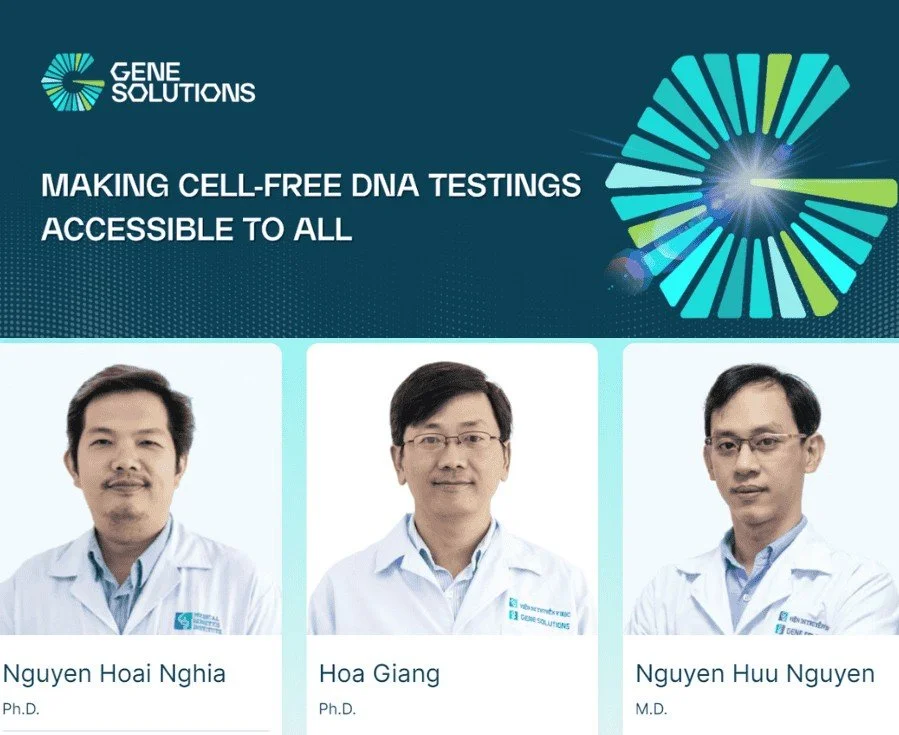
![Gene Solutions]()
Gene Solutions Founders
Dr. Nguyen Hoai Nghia, Dr. Nguyen Huu Nguyen, and Dr. Giang Hoa
“We were thinking, maybe we can develop the technology for next-generation gene sequencing in Vietnam. That was the beginning and it all began with a drop of blood. We are supporting thousands of doctors and patients in daily clinical practices.”